Applying an existing design system responsibly to support scale, flexibility, and long-term maintainability across enterprise clients.
IMPACT
Enabled multiple enterprise retail clients to ship faster on a shared platform, without fragmenting the underlying system.
I applied an existing design system at scale, balancing delivery speed, brand flexibility, and long-term maintainability across storefronts with very different needs.
CONTEXT
A shared system supporting many clients introduces different risks than a single-product environment.
Rather than designing new systems per client, the challenge was adapting real product needs to a shared foundation while preserving consistency, flexibility, and delivery speed over time.
I worked at a digital commerce agency supporting multiple enterprise retail clients on a shared, desktop-first e-commerce platform. The platform relied on an internal design system intended to accelerate delivery across storefronts.
THE PROBLEM, FRAMED AS RISK
On one end of the spectrum, bespoke client builds led to:
Slower delivery timelines
High design and engineering overhead
Repeated reinvention of common patterns
On the other end, overly rigid system usage resulted in:
Poor fit for real client requirements
Limited brand expression
Increasing workarounds that quietly fractured the system
Without clear guidance, the platform risked becoming neither flexible nor scalable, undermining the very efficiency the system was meant to provide.
CONSTRAINTS AND NON-NEGOTIABLES
This work had to operate within fixed technical and organizational constraints.
An existing internal design system already adopted by teams
Multiple enterprise brands with distinct visual and structural needs
Desktop-first layouts with responsive breakpoints
Close alignment with established engineering patterns and third-party e-commerce integrations
The goal wasn’t visual reinvention, but sustainable system application over time.
SYSTEM STRATEGY
Scale came from reusable structure, not surface-level customization.
Rather than designing one-off solutions per client, the work focused on defining reusable patterns that could flex across implementations.
This included:
A shared catalog experience that scaled across breakpoints while preserving information hierarchy
Baseline product detail layouts designed for reuse across clients
Variant behaviours handled through shared logic, not bespoke layouts
End-to-end transactional flows designed for consistent behavior across builds
The emphasis was on structure, predictability, and reuse, not cosmetic customization.
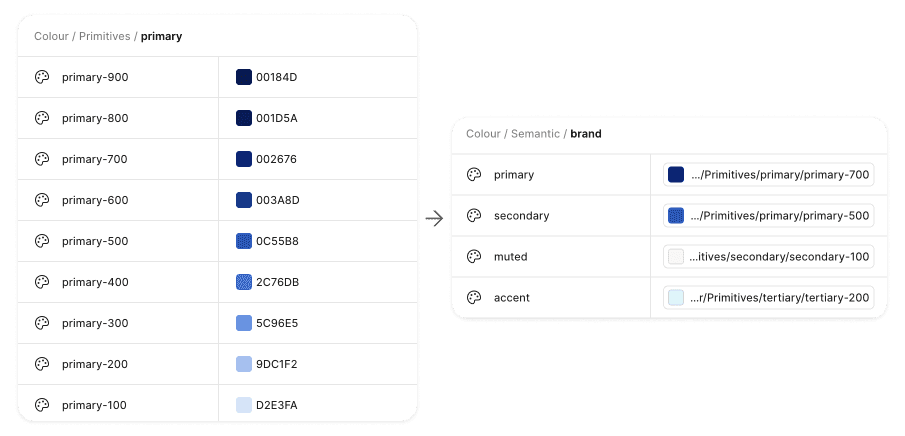
Token System
Semantic tokens reference primitive scales, enabling brand theming without refactoring components.
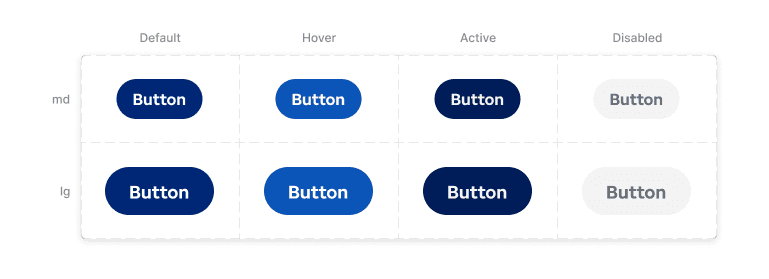
Component Foundations
A single button component handled state and interaction consistently across sizes and contexts.
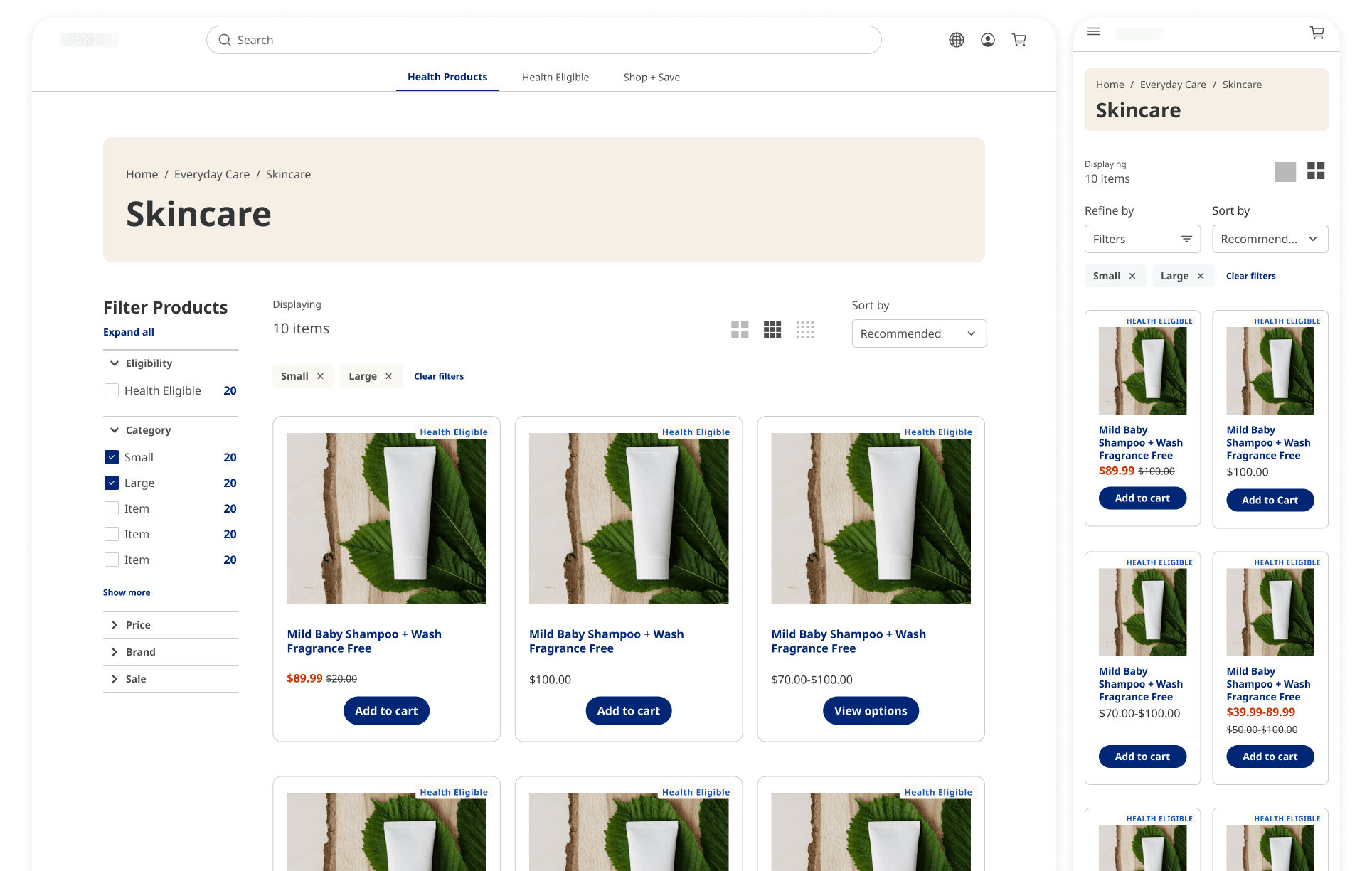
Desktop and tablet/mobile breakpoints
A shared catalog layout adapted across breakpoints while preserving hierarchy and behavior.
Product Detail System

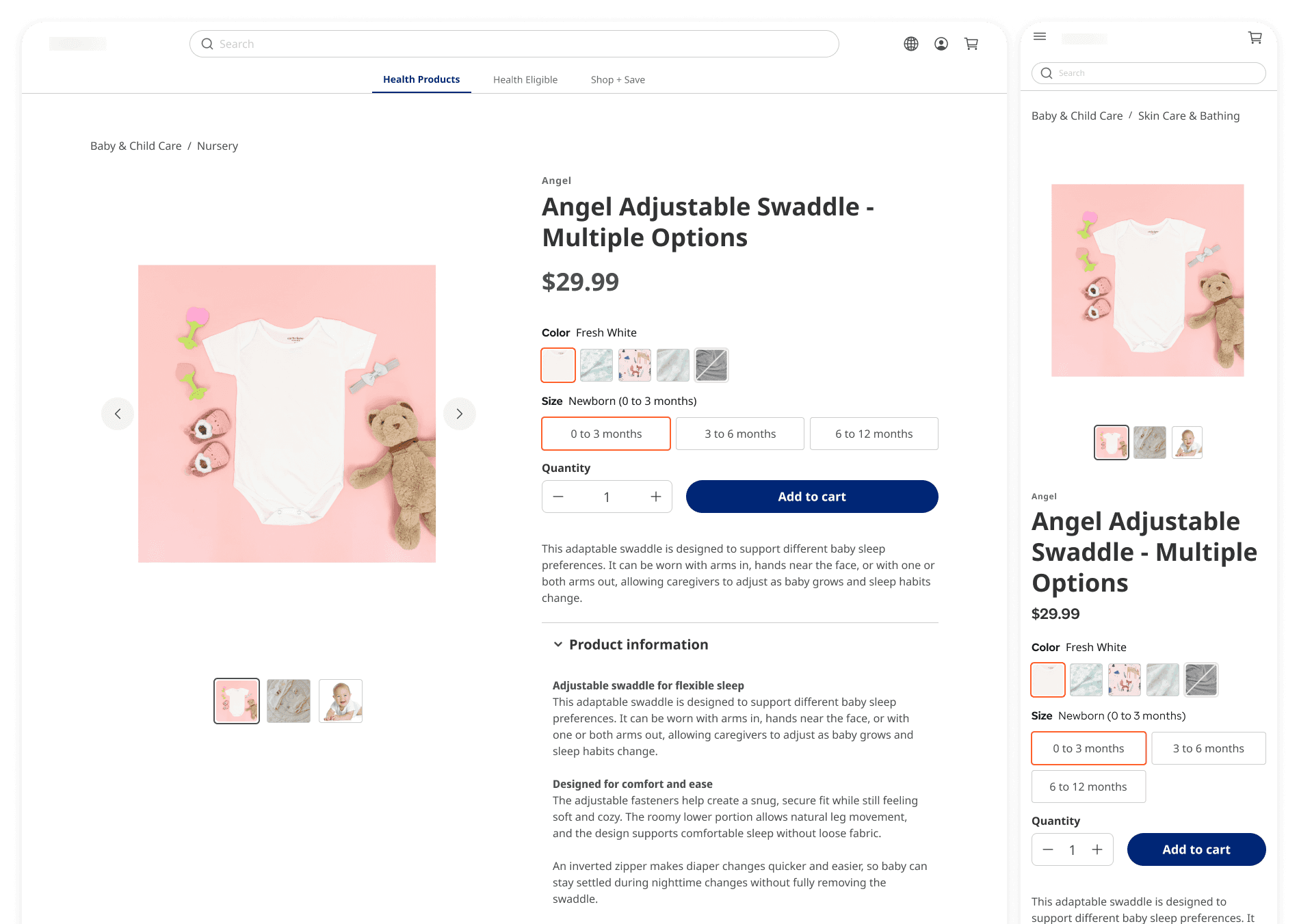
Variant complexity handled through shared structure
Default and multi-variant products use the same Product Details page foundation, with complexity managed through configuration rather than layout changes.
MY ROLE
I was responsible for:
Auditing and mapping existing system usage across key pages and flows
Mapping screens to existing components and identifying gaps
Defining page-level information architecture to support reuse
Delivering screen inventories and scoped plans for implementation
This work translated abstract system rules into practical guidance teams could reliably ship against.
KEY TRADEOFFS
Tokens vs Components
Deciding which values required flexibility and which should remain fixed
Fixed vs Themable Layers
Enabling brand differentiation without fragmenting structure
Extension vs Enforcement
Extending the system only when reuse would block real client needs
Information Architecture
Designing layouts that encouraged reuse rather than exceptions
THE OUTCOME
The system scaled more reliably as new clients and requirements were added.
This work led to:
Faster onboarding of new client builds
Reduced custom design and development effort
Clearer system adoption across teams
More time spent improving UX quality instead of rework
Most importantly, it established guardrails that allowed the platform to grow without sacrificing coherence.
REFLECTION
At scale, flexibility isn’t about how much a system can bend, but how consistently it behaves under change.
Designing for multiple clients required resisting short-term customization in favor of long-term system health. By prioritizing shared structure over surface-level differentiation, the platform remained adaptable without becoming fragmented.
This case represents my strength in systems thinking, long-term judgment, and designing for durability across teams, clients, and time.